# 63. Unique Paths II
## Problem
{% embed url="" %}
## Intuition
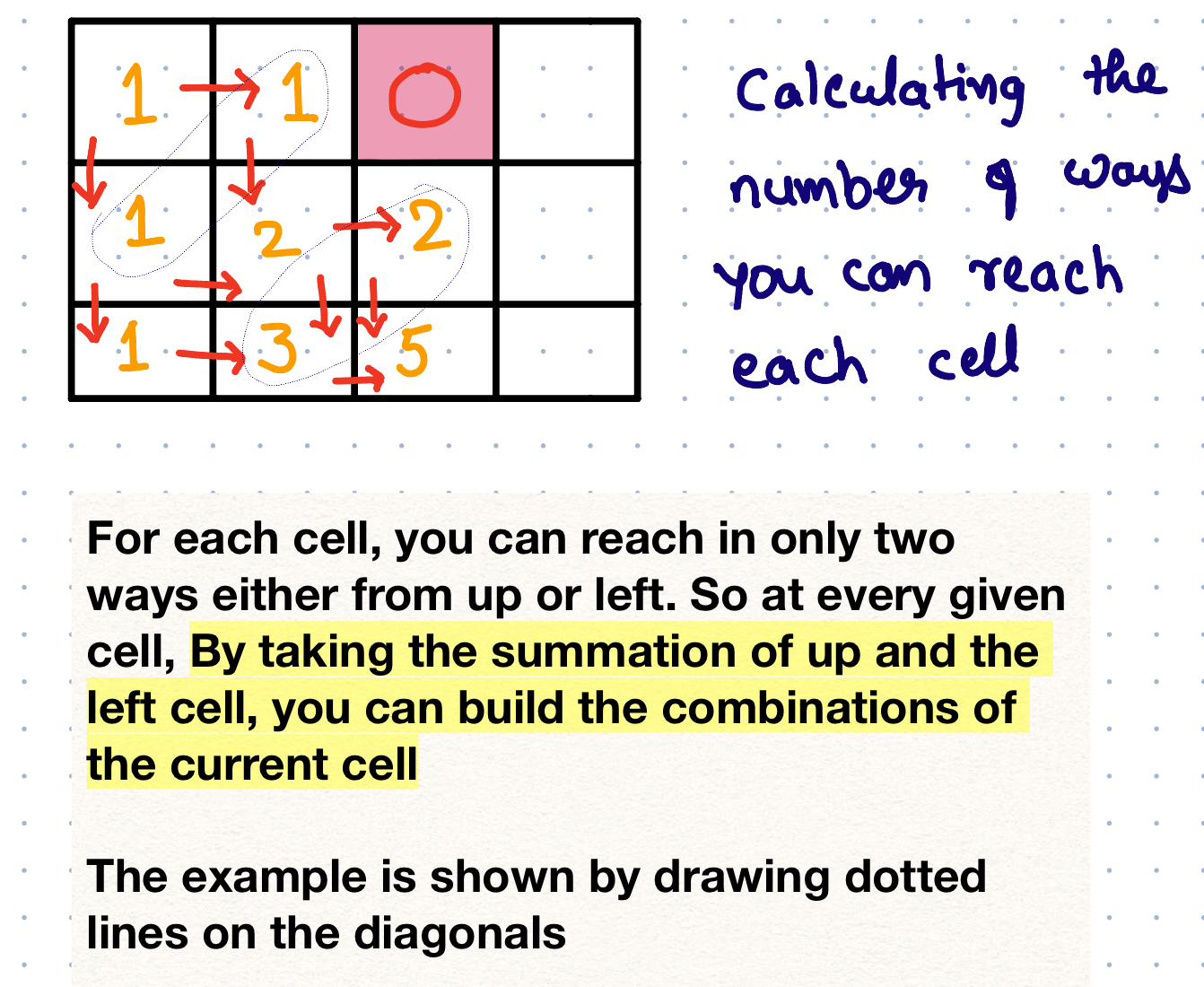
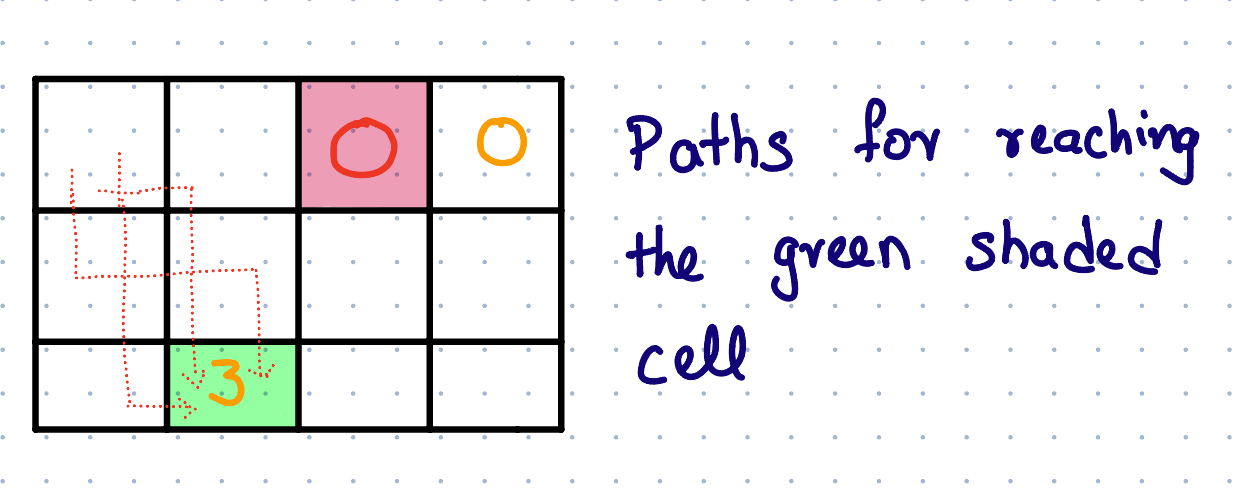
It follows the same approach as [62.-finding-unique-path](https://chkrishnatej.gitbook.io/interview-prep/dynamic-programming/2d-dp/62.-finding-unique-path "mention"). The only thing is it has an extra constraint where you could be blocked from exploring in few cells.
## Solution
```java
class Solution {
public int uniquePathsWithObstacles(int[][] grid) {
int m = grid.length, n = grid[0].length;
int[][] dp = new int[m][n];
return tabulationHelper(grid, dp);
}
/**
* Calculates the number of unique paths using a tabulation (bottom-up) approach.
*/
private int tabulationHelper(int[][] grid, int[][] dp) {
if(grid[0][0] == 1) {
return 0;
}
dp[0][0] = 1;
int R = grid.length, C = grid[0].length;
// Calculate the number of paths for the first column
for(int row = 1; row < R; row++) {
// Before we update the current dp cell, we need to check if the
// current cell of grid is accessible and also check if the previous
// cell is accessible. If the previous cell is not accessible then
// the move cannot be made to current cell.
if(grid[row][0] == 0 && dp[row-1][0] == 1) {
dp[row][0] = 1;
}
}
// Calculate the number of paths for the first row
for(int col = 1; col < C; col++) {
if(grid[0][col] == 0 && dp[0][col-1] == 1) {
dp[0][col] = 1;
}
}
// Calculate the number of paths for the remaining cells
for(int row = 1; row < R; row++) {
for(int col = 1; col < C; col++) {
if(grid[row][col] == 0) {
int up = dp[row-1][col];
int left = dp[row][col-1];
dp[row][col] = up + left;
}
}
}
return dp[R-1][C-1];
}
/**
* Calculates the number of unique paths using a memoization (top-down) approach.
* This function is not used in this code.
*/
private int memoizationHelper(int i, int j, int[][] grid, int[][] dp) {
// If we go out of bounds or encounter an obstacle, return 0 as there are no paths.
if(i < 0 || j < 0 || grid[i][j] == 1) {
return 0;
}
// If we reach the top-left corner, return 1 as we have found a unique path.
if(i == 0 && j == 0) {
return 1;
}
// If the result for the current position is already computed, return it.
if(dp[i][j] != 0) {
return dp[i][j];
}
// Calculate the number of paths by recursively moving either up or left.
int up = recursiveHelper(i-1, j, grid);
int left = recursiveHelper(i, j-1, grid);
// Store the computed result in the dp array and return it.
return dp[i][j] = up + left;
}
/**
* Calculates the number of unique paths using a recursive approach.
*/
private int recursiveHelper(int i, int j, int[][] grid) {
// If we reach the top-left corner, return 1 as we have found a unique path.
if(i == 0 && j == 0) {
return 1;
}
// If we go out of bounds or encounter an obstacle, return 0 as there are no paths.
if(i < 0 || j < 0 || grid[i][j] == 1) {
return 0;
}
// Calculate the number of paths by recursively moving either up or left.
int up = recursiveHelper(i-1, j, grid);
int left = recursiveHelper(i, j-1, grid);
// Return the sum of paths from the current position.
return up + left;
}
}
```